
5. Cold Feet
Some people naturally have colder feet than others. However, feet that remain unusually cold even in warm environments may suggest reduced blood flow.
Possible explanations include:
- Peripheral artery disease
- Diabetes
- Smoking-related circulation problems
- Hypothyroidism
- Anemia
Cold feet accompanied by pain, discoloration, or wounds that won't heal should be assessed by a healthcare professional.
6. Foot Pain That Won't Go Away
Persistent foot pain isn't always caused by overuse.
Possible causes include:
- Arthritis
- Plantar fasciitis
- Stress fractures
- Tendon injuries
- Nerve disorders
- Gout
Pain lasting several weeks or interfering with daily activities should be evaluated rather than simply managed with pain relievers.
7. Changes in Skin Color
Healthy feet usually have an even skin tone. Sudden color changes may indicate circulation or vascular problems.
Watch for:
- Pale skin
- Blue or purple discoloration
- Bright redness
- Dark patches
These changes may signal poor blood flow, infection, inflammation, or other medical conditions that require evaluation.
8. Slow-Healing Cuts or Sores
Small cuts on the feet usually heal within a reasonable time.
If wounds remain open for weeks, repeatedly become infected, or worsen, they may indicate:
- Diabetes
- Poor circulation
- Peripheral artery disease
- Immune system disorders
People living with diabetes should inspect their feet daily because untreated wounds can become serious.
9. Thick, Brittle, or Discolored Toenails
Toenail changes are common and often caused by fungal infections. However, they may also reflect underlying health concerns.
Possible causes include:
- Fungal nail infection
- Psoriasis
- Injury
- Poor circulation
- Aging
Although nail changes are not always serious, persistent changes should be assessed if accompanied by pain or swelling.
How Diabetes Can Affect the Feet
Diabetes is one of the most common conditions associated with foot problems.
High blood sugar over time may damage both nerves and blood vessels, reducing sensation while limiting blood flow needed for healing.
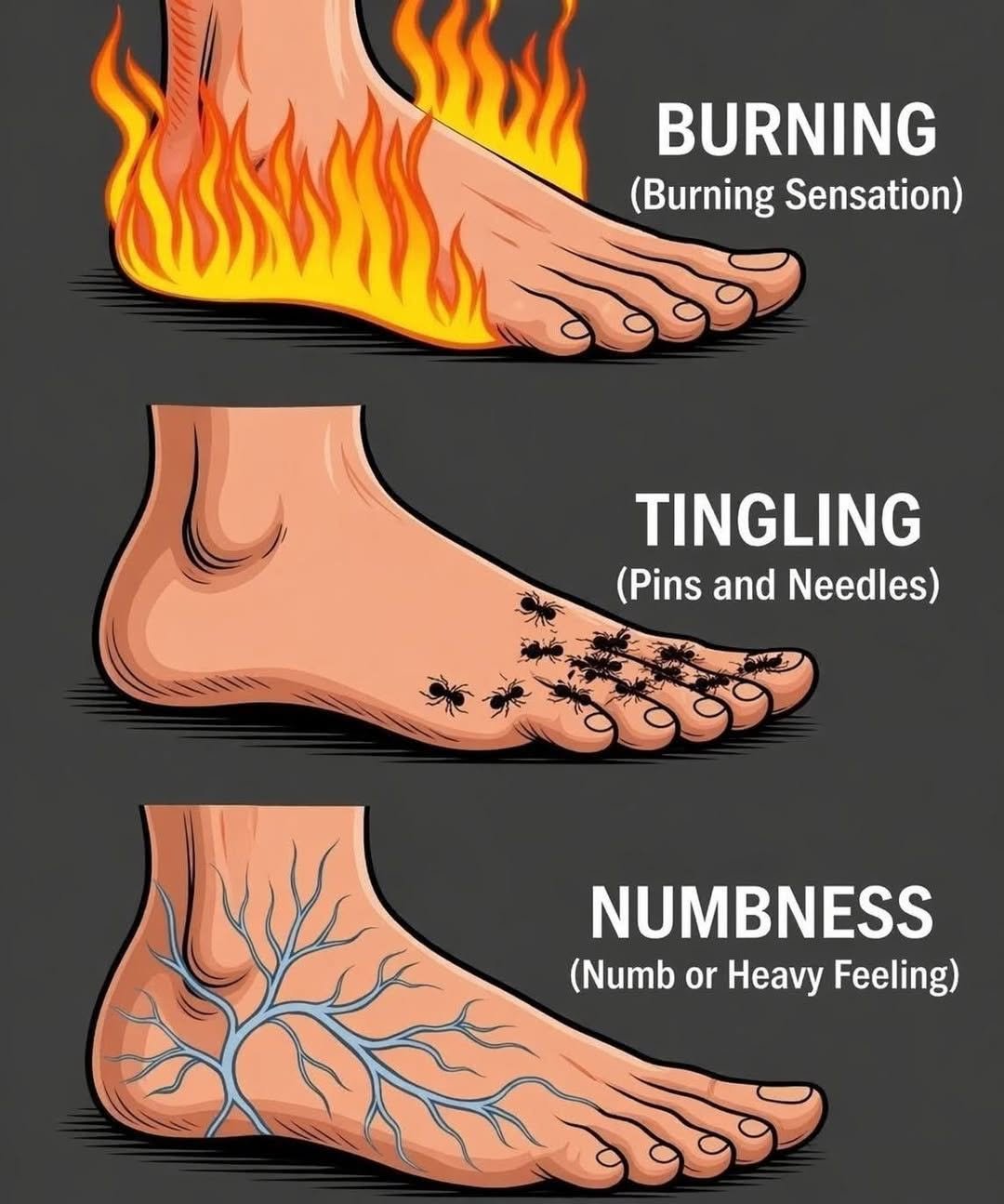
Possible foot symptoms of diabetes include:
- Burning sensations
- Tingling
- Numbness
- Dry skin
- Cracked heels
- Slow-healing wounds
- Increased infections
Good blood sugar management and regular foot care can help reduce these risks.
The Role of Poor Circulation
Healthy circulation delivers oxygen and nutrients to the feet.
When blood flow decreases, symptoms may include:
- Cold feet
- Leg cramps while walking
- Slow wound healing
- Pale skin
- Weak pulses
- Hair loss on the lower legs
Lifestyle changes and medical treatment may help improve circulation depending on the underlying cause.
The rest is on the next page
