
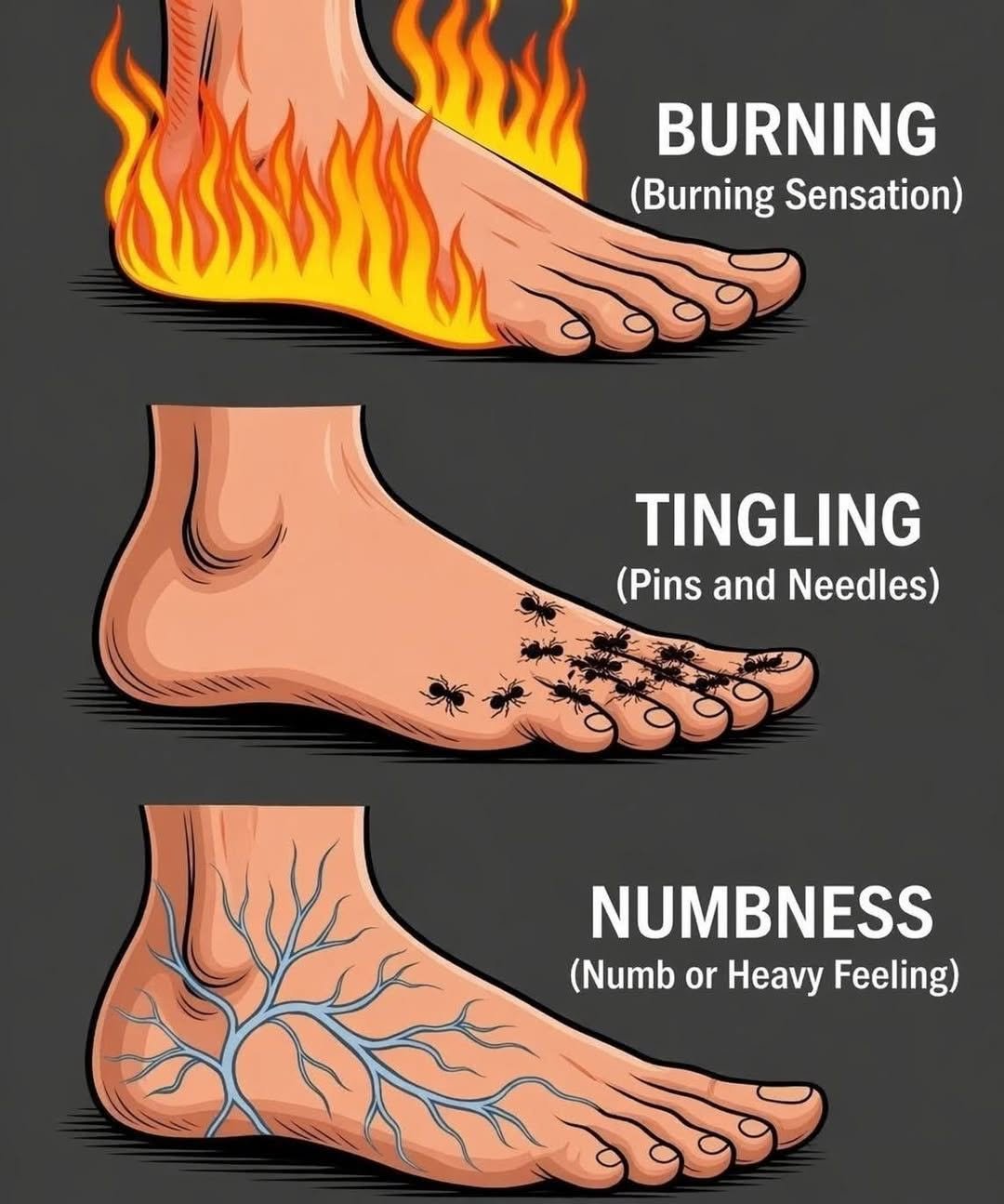
Your feet do much more than help you walk—they can also provide valuable clues about your overall health. Changes in how your feet look or feel may sometimes point to circulation problems, nerve disorders, vitamin deficiencies, or other medical conditions that deserve attention.
While occasional foot discomfort after a long day is normal, persistent or unusual symptoms should never be ignored. Recognizing these warning signs early may help you seek medical advice before a small problem becomes more serious.
Disclaimer: This article is for educational purposes only and should not be used to diagnose or treat any medical condition. If you experience severe, persistent, or worsening symptoms, consult a qualified healthcare professional for an accurate evaluation.
Why Your Feet Can Reveal So Much About Your Health
Your feet contain thousands of nerves, dozens of joints, and an extensive network of blood vessels. Because they are far from the heart, they are often among the first places where circulation problems, nerve damage, or inflammation become noticeable.
Certain conditions—including diabetes, peripheral artery disease, vitamin deficiencies, autoimmune disorders, and nerve compression—can all affect the feet long before other symptoms appear.
Paying attention to changes may help you identify problems earlier.
1. Burning Feet
A burning sensation in the feet may feel like walking on hot sand or standing near a fire. Some people experience mild warmth, while others describe severe burning that becomes worse at night.
Possible causes include:
- Peripheral neuropathy
- Diabetes
- Vitamin B deficiency
- Excessive alcohol use
- Nerve compression
- Certain medications
Burning feet that occur regularly should be evaluated by a healthcare provider, especially if accompanied by numbness or weakness.
2. Tingling or "Pins and Needles"
Occasional tingling after sitting in one position is common. However, frequent tingling without an obvious reason may indicate an underlying issue.
Potential causes include:
- Poor circulation
- Nerve damage
- Diabetes
- Vitamin deficiencies
- Sciatica
- Multiple sclerosis
- Compression of peripheral nerves
Persistent tingling should not be ignored, particularly if it affects both feet.
3. Numbness
Loss of sensation in the feet can make walking difficult and increase the risk of unnoticed injuries.
You may notice:
- Reduced feeling when walking
- Difficulty sensing temperature
- Trouble maintaining balance
- Feeling as though you're wearing thick socks
Numbness is commonly associated with diabetic neuropathy but can also result from spinal disorders, circulation problems, or nerve injuries.
4. Swollen Feet and Ankles
Mild swelling after standing all day may be harmless. However, swelling that appears suddenly, becomes severe, or doesn't improve deserves medical attention.
Possible causes include:
- Poor circulation
- Venous insufficiency
- Heart disease
- Kidney disease
- Liver disease
- Pregnancy
- Certain medications
If swelling occurs alongside chest pain or shortness of breath, seek emergency medical care immediately.
The rest is on the next page
