
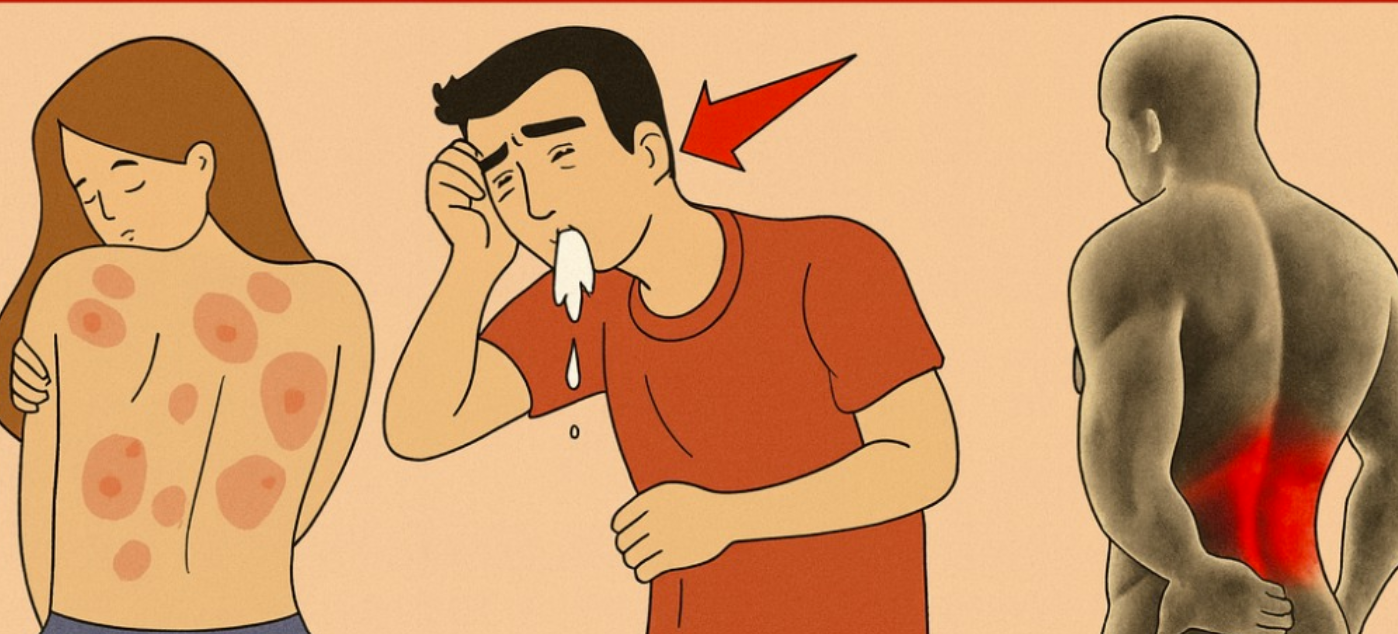
13. Dry Skin
Healthy kidneys help maintain the body's mineral balance.
Dry, flaky skin may occasionally accompany kidney disease, although it is much more commonly caused by weather, dehydration, or skin conditions.
14. Loss of Appetite
People experiencing reduced kidney function sometimes notice that they no longer enjoy foods they once loved.
This symptom often develops gradually.
15. Nausea
As waste products accumulate, some individuals may begin experiencing nausea, particularly in the morning.
Persistent nausea should always be discussed with a healthcare provider.
16. Vomiting
More advanced kidney dysfunction may lead to episodes of vomiting, especially when toxin levels become significantly elevated.
17. High Blood Pressure
High blood pressure can both cause kidney disease and result from kidney disease.
The two conditions often create a cycle where each makes the other worse.
18. Lower Back Pain
Pain located near the kidneys may occur in certain kidney conditions such as infections or kidney stones.
However, chronic kidney disease often develops without pain.
Persistent severe back pain should always be medically evaluated.
19. Difficulty Sleeping
Poor sleep quality is common among people with kidney disease.
Frequent nighttime urination, muscle cramps, itching, and restless legs may all interfere with restful sleep.
20. Reduced Urine Output
Producing much less urine than usual may indicate that the kidneys are not functioning properly.
However, dehydration can also temporarily reduce urine production.
21. Persistent High Blood Sugar
Diabetes remains one of the leading causes of chronic kidney disease worldwide.
Keeping blood sugar under control is one of the most effective ways to protect kidney health.
22. Feeling Cold Frequently
Anemia caused by reduced kidney function may leave some people feeling unusually cold even in warm environments.
23. Persistent Swelling Combined With Fatigue
One isolated symptom rarely confirms kidney disease.
However, when several symptoms appear together—such as fatigue, swelling, foamy urine, and changes in urination—it becomes much more important to seek medical evaluation.
Early diagnosis can significantly improve long-term outcomes.
The rest is on the next page
